Robotic arms, at central point of modern production and manufacturing have been transforming the norms in a way that was previously impossible to imagine. They are able to combine the highest level of safety, precision and effectiveness. These amazing machines – commonly called robot arms – have become indispensable to industries around the world, driven by an urgent need to cut costs without compromising on quality. Robotic arms are now integrated into production lines to reduce cost and increase security. Discover how these revolutionary machines have reshaped the landscape of industrial production.
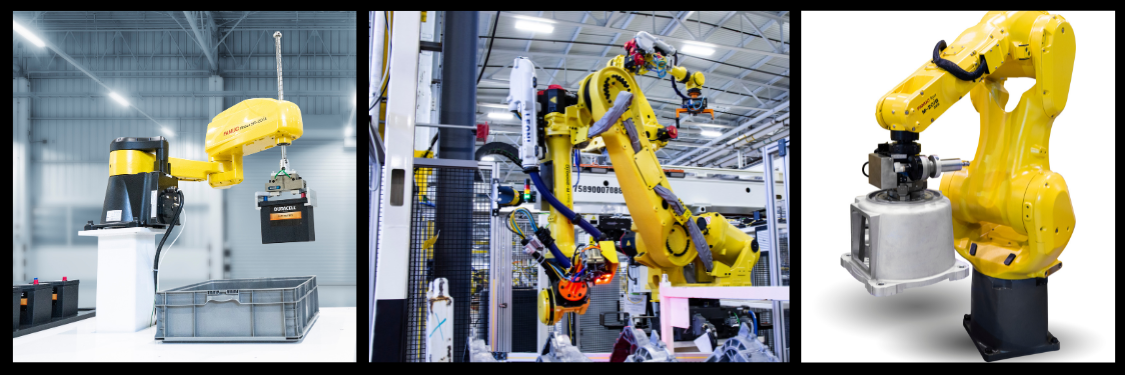
Image credit: automatedsolutions.com.au
Cost-effectiveness is driving the introduction robots across the globe. The increasing pressure on factories to reduce production errors, material waste and workplace accidents is relentless. A robotic arm tackles these issues. Robots eliminate costly errors, and reduce waste of raw materials because they can perform repetitive tasks more accurately than humans. Robots are used in many industries that require large quantities of material for example, the automotive industry to ensure perfect assembly. This can lead to significant savings because less damaged products mean less rework or waste.
The security of robotic arms is an important element. Numerous manufacturing jobs like working with hazardous materials or using large machinery pose risks for human workers. Robot arms enable companies to keep their employees away from risky working environments and minimize the risk of injuries at work. Robot arms, created as a kinematic ring of moveable joints, is modeled after the functionality of a human arm, but is not at the threat of physical harm. These machines are equipped with robotic hands, or programmable end-effectors. They can perform tasks like grasping spinning and welding in conditions that make it unsafe for humans.
The versatility of robotic arms makes them a game-changer across diverse industries. Robot arms can handle a variety of tasks. From automotive assembly, to electronics production. They can carry out complex tasks with unmatched precision, including painting and tending to machines. Robotic arms in warehouses have revolutionized palletizing through the automation of load of goods onto pallets. The automation improves productivity as well as reliability because robot arms work continuously without getting tired.
The rise of cobots (collaborative robots) which work in conjunction with human workers is one of the most exciting advances in this area. Cobots that are fitted with robotic arm, can work seamlessly with humans in contrast to industrial robots that are typically restricted to cells. The robotic hand of a cobot can be utilized to complete routine tasks like heavy lifting in factories, so that workers can be freed up to handle more complex duties. Collaboration increases efficiency and ensures a secure workplace since cobots may be programmed to change or stop their movement when the person in front of them is.
The effects of robotic arms go beyond safety and efficiency, to the very foundations of modern manufacturing. The ability robotic arms to carry out tasks with great accuracy including welding, material handling, or assembly, has made them indispensable in areas where safety is the top priority. A robotic arm, for example, can be utilized to rotate and position parts during assembly in the automobile industry, making sure they are in perfect alignment without any human involvement. In the field of electronics, robotics are employed to manage delicate components, which decreases damage and improves output quality.
As industries continue their evolution robots’ roles will grow. The ability of robot arms to reduce costs, improve safety and adapt to diverse tasks make them the foundation of the future of manufacturing. Combining cutting-edge technology with human ingenuity Robot arms are not simply tools. They’re part of progress, driving innovation and changing our way of building our world.